eventi
“Imaginary: A Synthetic Function of Perception”
PRESS RELEASE - read more
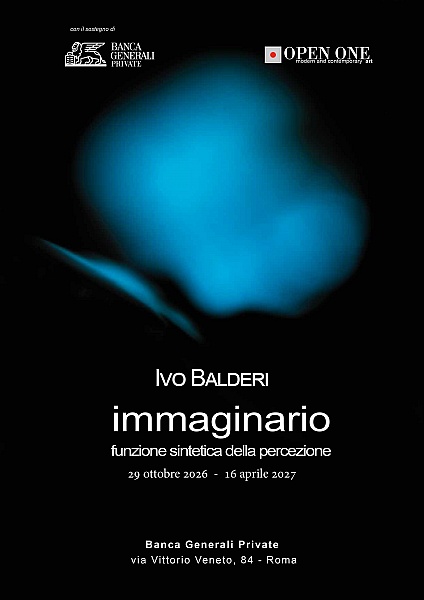
PRESS RELEASE
When art and photography meet: Banca Generali Private in Rome presents “Immaginario” (“Imaginary”), an exhibition by Ivo Balderi, organized in collaboration with the Open One gallery in Pietrasanta.
The exhibition features 40 photographs that document the Milanese photographer’s journey through artists’ studios—both in Italy and abroad—captured using an “out-of-focus” technique. It is open to the public by appointment from October 30th through April 16, 2027.
Starting Friday, October 30th, the Banca Generali Private branch (Via Vittorio Veneto 84, Rome) is hosting the exhibition “Immaginario, funzione sintetica della percezione” (“Imaginary: A Synthetic Function of Perception”) by Ivo Balderi. The exhibition is produced in partnership with the Open One Art Gallery in Pietrasanta (Lucca)—founded by Diego Bovecchi—a gallery that has been a cornerstone of the contemporary art, sculpture, and photography scene in the heart of the Versilia region for over thirty years, having showcased numerous internationally renowned artists. The exhibition unfolds throughout the common areas of the bank, presenting 40 large- and medium-format photographs. These works are the result of a new project by the Milanese photographer, whose distinguished career spans the fields of industrial photography, advertising, fine art, and reportage.
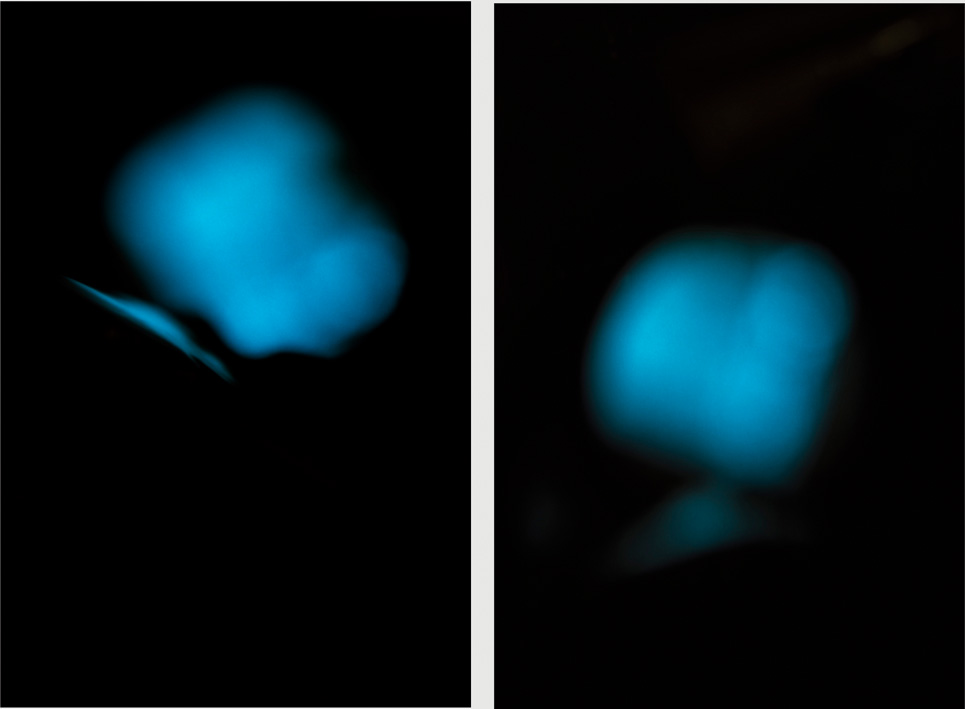 The photograph was taken in Pino Di Gennaro’s studio in Milan.
Photo title: "IMMAGINARIO_PDGE_34a" – diptych
The images stem from an exploration of perception, imagination, and the relationship between reality and the imagined. Through the deliberate use of an out-of-focus technique, Balderi—who grew up in an environment deeply rooted in the arts (his father was the sculptor Iginio Balderi, and his mother was the photographer Conny Van Kasteel)—explores the studios of both Italian and international artists with whom he has shared deep personal and cultural connections over the years.
The project is constantly evolving and set to expand through new encounters with artists and their studios, each serving as an opportunity to further his research. Artistic tools, details, and fragments are transformed into images open to interpretation, where reality serves as a starting point for constructing a new visual dimension.
Balderi subverts the technical conventions of photography: he employs various film formats, reflex cameras, and the large-format view camera—an instrument historically associated with precision and image control, yet here paradoxically used to achieve a deliberate out-of-focus effect. This creates a visual and conceptual short circuit that transforms concrete reality into abstract images, leaving room for the viewer’s own perception and interpretation.
Balderi himself explains: “These are photographic images depicting work tools, splashes of color on the walls or floor of an artist’s studio—and, at times, details of an artwork—all of which are completely transformed by this particular way of photographing, allowing me to convey my own ‘imaginary’ through fantasy. In this process, I start from a very concrete reality to arrive at an abstract image, leaving the viewer free to interpret it.”
Photography historian and critic Roberto Mutti highlights the theoretical significance of this approach: “Ivo Balderi creates an imaginative journey that connects the visible and the invisible, reality and fantasy, the present and the future, projecting them into a dimension full of surprises. This ‘close encounter’ between the photographer—who pursues his subject—and the subject itself—which consents to being captured—unfolds like a hall of mirrors; for to engage with a work of art is also to embark on an exploration of oneself.”
Balderi concludes: “The exhibition serves as a tribute to art and to the relationship between photography, perception, and artistic creation. Through images that deliberately hover between the recognizable and the abstract, ‘Immaginario’ invites the viewer to complete the work through their own gaze and imagination.”
Exhibition Information
Title: *Immaginario* (Imaginary/Imagination) – A Synthetic Function of Perception: Photographing the Imaginary for an Immersive Journey into Fantasy
Artist: Ivo Balderi
Venue: Banca Generali Private, Via Vittorio Veneto 84, Rome
Open to visitors by appointment, tel. 064888171
Admission: Free
Works on display: 40 large- and medium-format photographs
Information: mail@openone.it; “Immaginario.IvoBalderi” pages on Facebook and Instagram
Biography
Ivo Balderi was born in Milan in 1964 into a family of artists: his father was the sculptor Iginio Balderi, and his mother was the photographer Conny Van Kasteel. As a child, he spent time in his mother’s photography agency, where he became fascinated by slides and prints. He has worked professionally as a photographer since 1983, also specializing early on in video production.
His career spans the fields of industry, advertising, art, and reportage. He has collaborated with the FAO on reportage projects in Africa, with advertising agencies on promotional photos and videos, and with various artists to produce exhibition catalogs. In Tuscany—where he currently resides—he has created videos focused on the rediscovery of traditional crafts and the local territory. For several years, he taught Still Life photography at the Brera Academy of Fine Arts in Milan and served for seven years as the artistic director of the *Seravezza Fotografia* festival.
From 2016 to 2023, he managed the photography agency IB Agency, which he closed to be able to dedicate himself entirely to his own personal artistic research. He is the president of the Iginio Balderi Archive and the Atelier Balderi exhibition space in Milan. There, in addition to managing his father’s body of work, he curates exhibitions for both established and emerging artists, promoting them within an international network. He is also involved with the “Conny van Kasteel” Art Foundation.
As of 2024, he has embarked on a new research project titled “Immaginario” (“Imaginary”): a series of intentionally out-of-focus photographs taken within the studios of Italian, Dutch, and German artists—individuals with whom he has long shared a deep rapport and cultural exchange. The images are captured using various film negative formats—at times employing a large-format view camera—almost as if to playfully challenge the instrument itself by deliberately working out of focus.
Press Office: Fabrizio Lucarini, tel. +39 340 7612178 Pietrasanta, October 20, 2026

an interpretation of the "KILKIS" reclining armchair, designed by Ammannati & Vitelli for Brunati (1985). Awarded at the Cologne Furniture Fair (Möbelmesse).
Photo title: "IMMAGINARIO_AV-BRU_KILKIS-4"
A GAME OF MIRRORS
text: Roberto Mutti
What happens when a pictorial work, unique by definition, confronts a photographic work, which possesses multiplicity in its very foundation? It seems like a secondary aspect in the complex and vast history of art, yet it raises profound issues that must be considered. If, as has always been done in antiquity, a painter reproduces a painting or a sculptor a statue (much Roman production made copies of Greek originals), once again, this generates other unique works characterized by precise technical adherence to the original or by those small, admitted imperfections that characterize them as so-called artist forgeries. When, however, a painting is transferred to a photographic medium, it changes register, becoming a completely different work. The myriad characteristics of the original—the fullness of a brushstroke, the way the texture of the medium emerges from a background that isn't completely covered, a smudge, the ripples that time causes to emerge—are captured and therefore replicable in a catalog, a postcard, a book, but they don't convey to the visitor the emotion of directly seeing those details. Of course, visiting Pompeii or entering Sant'Apollinare in Classe is a much more intense experience than examining the photographs that tell us about them; however, complicating matters is the fact that close-ups of the mosaics reveal more than what can be seen from afar. Let's get to the point: since photography existed, artists have used it to reproduce their works and submit them for cataloging, sometimes even doing so themselves, like Constantin Brancusi, whose black and white shots are as exquisite as his sculptures, or Man Ray, who, in addition to his own, also photographed those of others, even giving new life to Duchamp's Large Glass, which in his interpretation became Elévage de Poussière because it was, indeed, dusty at the time. When Ivo Balderi undertook the project presented here, he had these stories behind him and, as always happens in these cases, he found himself faced with a garden of forking paths, to put it in Borges's terms: on the one hand, moving within this tradition, on the other, considering it in order to distance himself from it. Balderi, who, with a father who was a sculptor and a mother who was a photographer and who had lived surrounded by art, chose the latter, and did so by broadening the scope of his research both in terms of photographic language and in that of investigating the depth of the artistic gesture. First, he shuffled the deck technically, using different film formats and a variety of cameras, including a reflex and a view camera, with which he created a speculative short circuit. While the latter has always served, thanks to its many adjustments, to produce extremely precise images, here it produces works that are completely out of focus. This is the outcome Ivo Balderi conceived by delving into the creative imagination of Italian and foreign artists with whom he established such a close relationship that it led to an experiential exchange. They allowed him complete freedom to roam their studios, freely capturing the objects and works created there; he used both to transfer them to a different perceptual and conceptual level that nevertheless does not betray their spirit because it explores it. The declared intention to create images unrecognizable except for certain traits attributable to their creator, traits that likely only he can capture—a certain intensity of red or blue, a detail attributable to an object, a way of occupying space—distances us from realism to lead us inside what appears to us to be the artist's very mind. Aren't those as yet undefined traits the intuition that crossed him and would lead him to the physical realization of that idea? The fact that the work is placed in perfectly recognizable contexts, such as the interior of a home, an exhibition space, or a museum, tells another interesting story: that of its journey far from the atelier where it was created to arrive where the artist had imagined or hoped to place it. By combining all these elements, Ivo Balderi creates an imaginative journey that connects the visible and the invisible, reality and fantasy, the present and the future, projecting them into a dimension full of surprises. This hand-to-hand combat between the photographer pursuing him and his subject, who agrees to be captured, turns into a game of mirrors, because come in contact with a work of art also means exploring oneself
Roberto Mutti - historian and critic of photography -
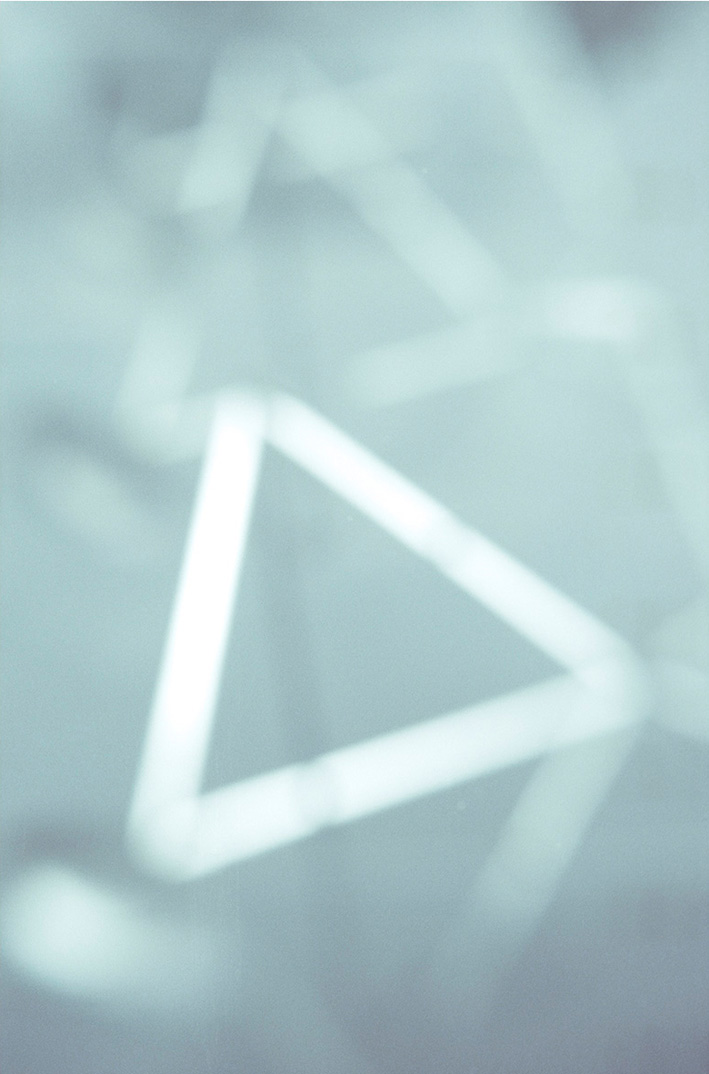
The photo was taken at the Atelier Balderi – Iginio Balderi Archive in Milan, featuring the sculpture "Colonna del 76" by Iginio Balderi.
Photo title: "IMMAGINARIO_IGB_29"
"Imaginary"
text: Ivo Balderi
Since 2024, I have begun a new theme of my personal research entitled "Imaginary" - synthetic function of perception - Photographing the imaginary for a complete journey into fantasy. This involves the creation of deliberately out-of-focus photographs in the studios of Italian, Dutch, and German artists, where a special relationship of understanding and cultural exchange has been established over the years. These photographs are made on various negative film formats, sometimes even using a view camera, almost as if to mock the latter in managing the out-of-focus effect. They are photographic images that portray work tools, splashes of color on the walls or floor of the artist's studio, and sometimes details of a work that are completely distorted by this method of photography, allowing me to express my imagination through fantasy, which is nothing other than the mind's ability to create images, ideas, and stories that do not exist in reality. In this case, however, I begin with a very concrete reality to arrive at an abstract image, leaving the viewer free to interpret.
This project, which will continue in the coming years, is a great tribute to art, and I want to thank all the artists who have given me the opportunity to realise it so far:
Anthonie Sas, Titina Ammannati and Giampiero Vitelli, Erik Oldenhof, Ernst Hesse, Francesco Maria Bandini, Iginio Balderi, Marino Marini, Mauro Staccioli, Marco Petrus, Nicola Maggi, Norbert Thomas, Pino Di Gennaro, Rinaldo Bovecchi, Rity Jansen Heijtmajer, rooose.
Ivo Balderi - 2026